Korea’s government on 2026-09-17 illustrated household-level impacts of its 2027 budget proposal through a hypothetical Sejong-based family, highlighting new and expanded life-cycle support programs. (Source: https://www.korea.kr/news/policyNewsView.do?newsId=148971827, 2026-09-17) A newly created marriage grant will pay registered couples 1 million KRW (about $731 at 1 USD = 1,368 KRW, ECB reference rate, 2026-09-16; source: https://korearoute.com/exchange/usd-to-krw) once per lifetime. (Source: https://www.korea.kr/news/policyNewsView.do?newsId=148971827, 2026-09-17) Childbirth support grants will pay 10 million KRW for a first child (up to 15 million KRW for rural/regional residents), 12 million KRW for a second child (17 million KRW regional), and 15 million KRW for a third or subsequent child (20 million KRW regional). (Source: https://www.korea.kr/news/policyNewsView.do?newsId=148971827, 2026-09-17)
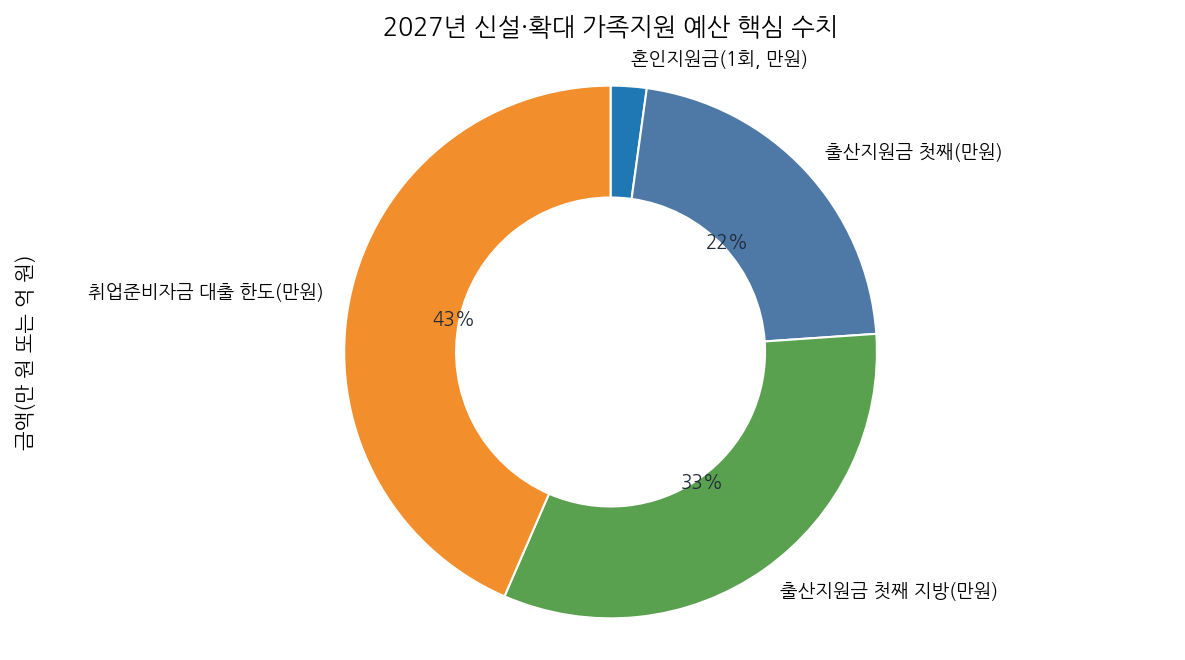
Electric vehicle purchase subsidies will expand to a record 430,000 vehicles, with the budget increasing by 500 billion KRW to a record 2.1 trillion KRW, while the per-vehicle subsidy cap (3 million KRW for passenger cars) stays unchanged. (Source: https://www.korea.kr/news/policyNewsView.do?newsId=148971827, 2026-09-17) A new job-preparation loan of up to 20 million KRW will be available to unemployed young people earning under 35 million KRW annually, with interest waived during the preparation period. (Source: https://www.korea.kr/news/policyNewsView.do?newsId=148971827, 2026-09-17)
How this fits the broader 2027 budget season
The Ministry of Health and Welfare separately announced its 2027 budget at 148.77 trillion KRW, up 8.2% year-on-year, with a record 6.7% increase to the basic livelihood benefit standard. (Source: https://metaqsol.com/archives/48361, 2026-09-05) The Ministry of Employment and Labor set its 2027 budget at 38.9537 trillion KRW, up 3.4%, launching a new “First Job Support Program” for youth. (Source: https://www.korea.kr/news/policyNewsView.do?newsId=148971226, 2026-09-04) The Ministry of Culture, Sports and Tourism raised its budget past 9 trillion KRW for the first time, up 22.6%, expanding its youth culture pass (100,000–150,000 KRW per person depending on region) to ages 19-34. (Source: https://www.korea.kr/news/policyNewsView.do?newsId=148971276, 2026-09-04) Today’s family-impact release translates these ministry-level totals into what an individual household would actually receive.
A comparable case: Japan’s childbirth support and EV subsidy design
Japan’s Children and Families Agency operates a combined counseling-and-cash-benefit program for pregnant women and new parents, bundling financial support with ongoing consultation services rather than a single lump-sum payment tied only to the birth event. (Source: https://www.cfa.go.jp/policies/shussan-kosodate/, accessed 2026-09-17) On EVs, Japan’s Next Generation Vehicle Promotion Center administers a Clean Energy Vehicle subsidy program on an annual fiscal-year basis, funding vehicle purchases and charging infrastructure installation as separate budget lines. (Source: https://www.cev-pc.or.jp/hojo/, accessed 2026-09-17) Korea’s approach of holding the per-vehicle subsidy cap flat while expanding unit volume differs from Japan’s split vehicle/infrastructure budgeting model; splitting the two areas allows more precise infrastructure tracking but also means separate applications for buyers.
Why this matters for Japan: Japan shares Korea’s low-birthrate challenge and its Children and Families Agency runs a comparable pregnancy/childbirth support structure, while its Next Generation Vehicle Promotion Center runs a comparable EV subsidy program with a different vehicle/infrastructure budget split. (Source: https://www.cfa.go.jp/policies/shussan-kosodate/, https://www.cev-pc.or.jp/hojo/) Readers evaluating which incentive design works can use this side-by-side as a starting point, though neither government has published comparative effectiveness data confirming one approach outperforms the other.
Industry impact
Holding the per-vehicle EV subsidy cap flat while raising the unit cap to 430,000 vehicles gives domestic automakers and battery suppliers more predictable 2027 domestic volume, though the flat subsidy level means the consumer discount will not deepen even as more units qualify. (Source: https://www.korea.kr/news/policyNewsView.do?newsId=148971827, 2026-09-17) A newly budgeted 1.45 billion KRW to upgrade the government’s “Ansim Jeonse” rental-risk-check app could create new demand for proptech and real-estate data integration work. (Source: https://www.korea.kr/news/policyNewsView.do?newsId=148971827, 2026-09-17)
Consumer impact
The most significant household-level change is that combined child allowance and parental benefit programs, once merged and expanded, could total up to 75 million KRW per child over time, though that figure is a cumulative ceiling across multiple benefit lines rather than a single lump-sum, so actual amounts will vary by residence, birth order, and income eligibility. (Source: https://www.korea.kr/news/policyNewsView.do?newsId=148971827, 2026-09-17) A new soldier injury insurance program and 18 months of post-discharge private health insurance subsidy were also announced for military families, though specific claim criteria have not yet been published. (Source: https://www.korea.kr/news/policyNewsView.do?newsId=148971827, 2026-09-17)
Source: Korea Policy Briefing, 2026-09-17 · References: MOHW budget coverage, 2026-09-05, Korea Policy Briefing (MOEL), 2026-09-04, Korea Policy Briefing (MCST), 2026-09-04, Japan Children and Families Agency, Japan Next Generation Vehicle Promotion Center, USD/KRW exchange rate, 2026-09-16