![[2026-08-14] 미래성장동력 '7대 SEED' 프로젝트 좌담 — SMR·양자·우주까지 10~20년 베팅, 미·중과 격차 좁힐까](https://metaqsol.com/wp-content/uploads/2026/08/hero_ai-11.png)
President Lee Jae-myung chaired a briefing at the presidential office on August 12 to launch the “7 SEED” project, South Korea’s national plan to build seven advanced-technology fields into core economic and security assets over the next 10 to 20 years. The Ministry of Science and ICT presented the plan, covering small modular reactors (SMR), nuclear fusion, renewable energy, quantum technology, space and aviation, advanced biotech, and advanced supply chains. Unlike a one-off budget announcement, the government said it will form a joint public-private “Future Pioneering Task Force” led by a deputy prime minister to review the roadmap on a quarterly basis.
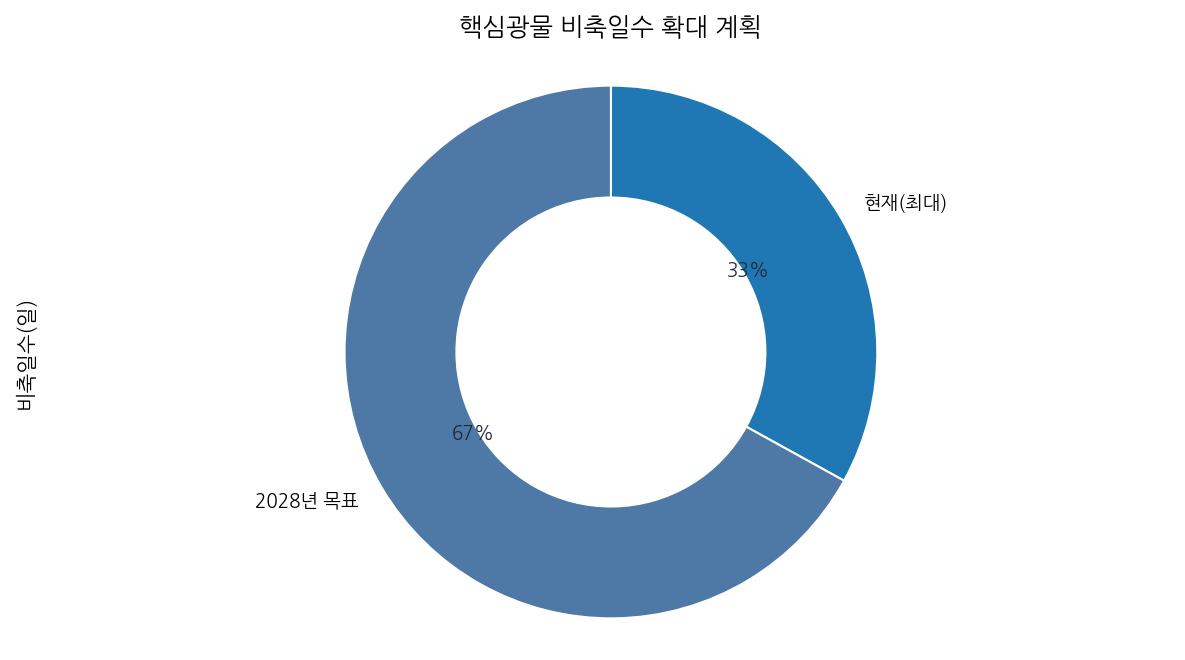
The most concrete number in the announcement is the critical-minerals stockpile plan: the government will expand stockpiled items from 24 to 29 types and extend stockpile coverage from a maximum of 180 days to 365 days, backed by a new reserve base in Saemangeum from 2028. Doubling the stockpile window means domestic battery and semiconductor-materials suppliers gain roughly six extra months of buffer against export restrictions or logistics disruptions from a dominant supplier country — reducing how often raw-material price shocks pass straight through to finished-goods prices for consumers.
Key targets across the 7 SEED fields
- SMR: light-water type commercialized by 2035; non-light-water construction starts in the 2030s; regulatory framework completed by 2030
- Fusion: Korean innovative fusion reactor built by 2035, targeting commercial power supply in the 2040s
- Quantum: a domestic 100-qubit error-corrected quantum computer by 2029; a “K-Quantum Foundry” targeting the world’s No. 1 manufacturing capacity by 2035
- Space: a lunar-orbit communications satellite in 2029, a privately led 700kg lunar lander in 2030, and an independent low-earth-orbit satellite communications network by 2035
- Advanced supply chains: raising the recycling rate of 10 core minerals to 20% by 2030; stockpiled items up from 24 to 29 types and coverage from 180 to 365 days; roughly $7.2B (10 trillion won) in R&D over five years for capability-building items
Context: part of a five-week policy series
The 7 SEED plan caps a run of related announcements. On August 5, Korea announced a $267B bet to fast-track its Yongin semiconductor cluster by up to 12 years. On August 6, it named five “Super Eul” materials-parts-equipment suppliers and committed roughly $65M to five cooperation projects. On August 8, it launched a domestic production tax credit for six strategic industries running through 2036. If the semiconductor cluster is the factory being built now, 7 SEED is the higher-level plan for what Korea intends to sell in 10 to 20 years.
Why this matters for the US: a parallel quantum bet
In May 2026, the US Department of Commerce signed letters of intent to provide $2.013 billion in CHIPS Act incentives to nine quantum companies, including two domestic quantum foundries and seven quantum-computing firms. China’s quantum sector, meanwhile, was already worth roughly $1.61 billion in 2025 and growing more than 30% a year, with the 15th Five-Year Plan naming quantum computing and space-ground quantum communications as national strategic technologies. Korea’s 2029 target of a 100-qubit domestic quantum computer, and its 2035 goal of leading global quantum-chip manufacturing through the “K-Quantum Foundry,” places it in direct competition with both US-funded foundries and China’s state-backed quantum sector for the same manufacturing niche — meaning US quantum-hardware and foundry investors now have a second state-backed competitor to track.
Industry and consumer impact
Small and mid-sized battery and semiconductor-materials suppliers should watch which minerals are added to the expanded 24-to-29-item stockpile list, since it will reshape sourcing strategy. Quantum and space startups gain a new pipeline of government-backed contracts through the K-Quantum Foundry and lunar-lander programs. Manufacturers outside the seven designated fields should prepare for R&D and tax incentives to tilt toward SEED-aligned industries. For consumers, most outcomes are 3 to 10 years away, but the mineral-stockpile expansion is the one piece that could show up sooner, in the form of smaller raw-material-driven price swings for batteries and appliances.
Source: Korea.kr Policy Briefing — Government Announces 7 SEED Project