![[2026-08-08] 국내생산세액공제 좌담 — 6대 전략산업 2036년까지 세제 지원, 미국·일본 따라잡을까](https://metaqsol.com/wp-content/uploads/2026/08/hero_orig-1.jpg)
South Korea’s Ministry of Trade, Industry and Energy said on August 7 that a new Domestic Production Tax Credit is included in the ‘2026 Tax Reform Plan’ announced August 3. The credit applies to six strategic fields where Korea’s domestic production base is weak but strategically important for the green transition and economic security: solar power, wind power, secondary batteries, semiconductors, core materials, and AI robot components. Companies that manufacture and sell domestically qualify for a credit sized by production volume and a base credit amount, running through December 31, 2036.
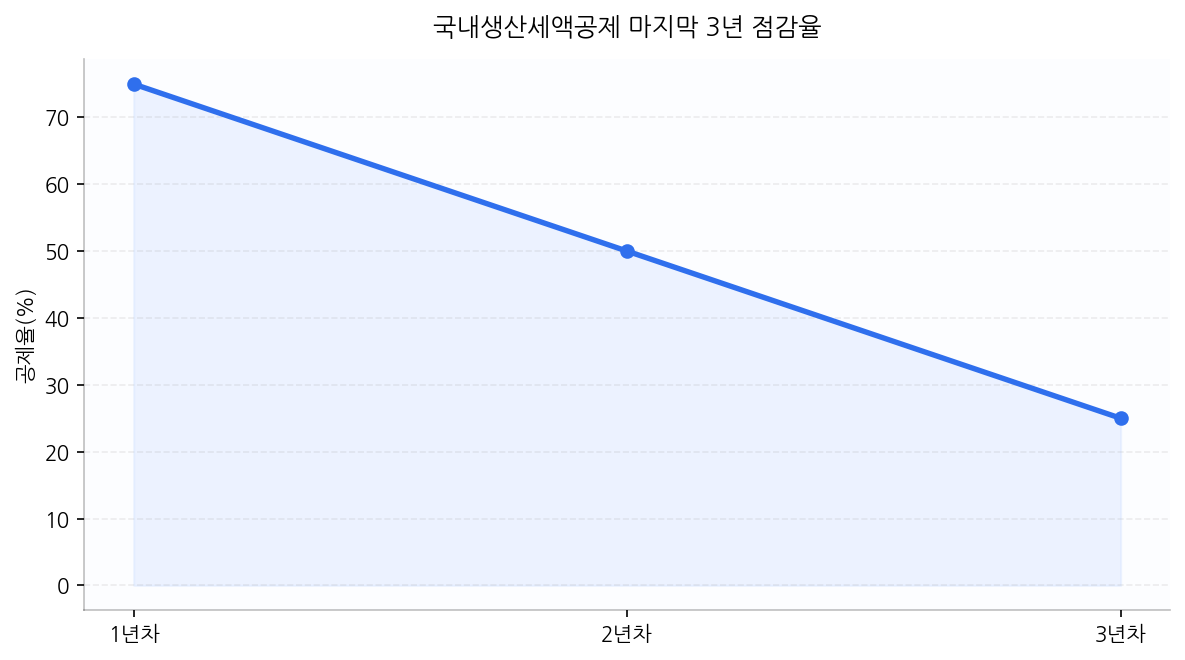
Unlike Korea’s existing National Strategic Technology tax credit, which rewards capital investment, the new credit is tied to actual output — an attempt to stop companies from claiming investment incentives while shifting production overseas. A regional multiplier gives higher benefits to production outside the greater Seoul area, aligned with the government’s ‘5 poles, 3 special zones’ regional growth push. To protect fiscal sustainability, the credit tapers in the program’s final three years, falling from 75% to 50% to 25% of the base amount, and it cannot be stacked with the integrated investment tax credit — the same non-stacking rule used in the US and Japan. (Source: Korea Policy Briefing)
Why This Matters to the United States
The US is the most direct point of comparison. Under the Inflation Reduction Act, the 45X Advanced Manufacturing Production Credit has offered a production-linked tax credit for eligible components manufactured and sold in the US since 2023, running through 2032. (Source: Korean Ministry of Foreign Affairs) Korea’s new credit follows the same production-based logic and explicitly avoids double-dipping with investment credits ‘in line with major economies including the US and Japan.’ For US-based semiconductor and battery makers competing for the same global capital, Korea narrowing the subsidy gap changes the calculus on where new fabs and gigafactories get sited — Korea’s Yongin semiconductor cluster acceleration, and this production credit is a follow-on lever aimed at the same global competition for fab investment.
Why This Matters to Japan
Japan enacted its own production-linked scheme, the Strategic Field Domestic Production Promotion Tax System, in its FY2024 tax reform, covering five sectors — EVs and batteries, semiconductors, sustainable aviation fuel (SAF), renewable energy, and green steel/green chemicals. Japan caps the corporate-tax offset at 20% for semiconductors and 40% for other sectors, with unused credits carried forward three years for semiconductors and four years for the rest. (Source: KOTRA Tokyo IT Support Center) Korea’s six-sector list overlaps closely with Japan’s five, meaning Japanese and Korean battery and chip makers will increasingly be judged by investors against near-identical domestic-production incentive structures.
Industry Impact
Semiconductors, batteries, solar, wind, core materials and AI robot components all share long payback periods and heavy upfront capital needs. A production-linked credit gives companies an ongoing incentive to keep output onshore rather than just claim a one-time investment credit and shift manufacturing abroad later. It builds directly on recent moves such as the materials-parts-equipment ‘Super Eul’ cooperation program and the Korea Light Source accelerator project, both aimed at strengthening the same supply chains from the input side.
Consumer Impact
For consumers, the effect is indirect: a sturdier domestic production base reduces the risk of supply disruptions for chips and batteries embedded in everyday electronics and vehicles, and could influence long-run solar and wind generation costs. Labor and civic groups counter that the revenue lost to large manufacturers could eventually be recovered through other taxes or reduced public spending, so the credit’s net effect on households will depend on how the National Assembly narrows eligibility during review.
References
- Korea Policy Briefing — Domestic Production Tax Credit newly established (Aug 7, 2026)
- Industry Journal — Tax credits for domestic chip and battery production
- KOTRA Tokyo IT Support Center — Japan Strategic Field Production Promotion Tax System
- Korean Ministry of Foreign Affairs — US IRA 45X guidance
Source: https://www.korea.kr/news/policyNewsView.do?newsId=148969682