South Korea’s Ministry of Climate, Energy and Environment promulgated an amendment to the Renewable Energy Development, Use and Promotion Act on 2026-09-15, replacing the country’s 15-year-old Renewable Portfolio Standard (RPS) with a competitive-auction-based “contract market” system. (Source: https://www.korea.kr/news/policyNewsView.do?newsId=148971917, 2026-09-15) The bill passed the National Assembly plenary session on 2026-08-20 and takes effect 2027-01-01. (Source: https://www.electimes.com/news/articleView.html?idxno=372424, 2026-09-15)
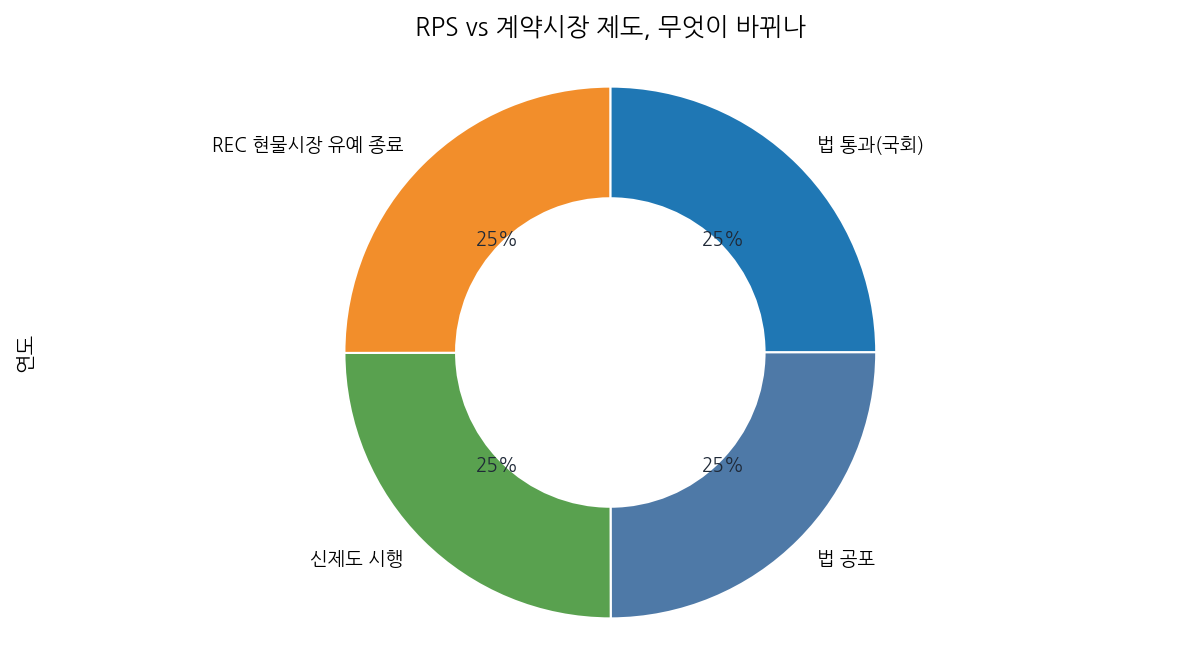
What changes under the new contract market
Starting in 2027, new solar and wind facilities will compete in technology-specific auction markets, bidding within a government-set ceiling price. (Source: https://www.korea.kr/news/policyNewsView.do?newsId=148971917, 2026-09-15) Winning operators sign long-term fixed-price power purchase agreements with state utility Korea Electric Power Corporation (KEPCO), replacing the prior system where operators sold Renewable Energy Certificates (RECs) on a spot market with fluctuating prices. (Source: https://www.korea.kr/news/policyNewsView.do?newsId=148971917, 2026-09-15) The RPS, introduced in 2012, had been criticized for exposing developers to REC price volatility and a complex certificate-trading structure that raised financing costs. (Source: https://www.korea.kr/news/policyNewsView.do?newsId=148971917, 2026-09-15)
The auction evaluation will weigh non-price factors alongside bid price, including a bidder’s contribution to domestic industry, supply chains, and energy security. (Source: https://www.korea.kr/news/policyNewsView.do?newsId=148971917, 2026-09-15) Existing RPS-era operators are not immediately affected: certificates will continue to be issued for up to 20 years under existing contracts, and the REC spot market itself continues for a three-year grace period through 2029-12-31. (Source: https://www.korea.kr/news/policyNewsView.do?newsId=148971917, 2026-09-15) A separate contract market track will also be created for small-scale facilities. (Source: https://www.korea.kr/news/policyNewsView.do?newsId=148971917, 2026-09-15)
A comparable case: UK’s Contracts for Difference
The UK has run a structurally similar mechanism, the Contracts for Difference (CfD) scheme, since 2014, under which government sets a strike price and generators are paid the difference versus the wholesale market price. (Source: https://www.gov.uk/government/collections/contracts-for-difference-cfd-allocation-rounds, 2024-09-01) In the 2023 Allocation Round 5 (AR5), the government set the offshore wind ceiling price too low relative to rising construction and financing costs, and zero offshore wind bids were submitted. (Source: https://www.gov.uk/government/collections/contracts-for-difference-cfd-allocation-rounds, 2024-09-01) The following Allocation Round 6 (AR6) raised the ceiling price substantially, which brought offshore wind bidders back to the table. (Source: https://www.gov.uk/government/collections/contracts-for-difference-cfd-allocation-rounds, 2024-09-01) Korea’s ceiling-price levels for its 2027 auctions have not yet been disclosed; the Ministry has only said further detail will be presented at a public hearing on 2026-09-30 in Seoul. (Source: https://www.korea.kr/news/policyNewsView.do?newsId=148971917, 2026-09-15)
Industry impact
Solar and wind developers gain predictable, long-term fixed revenue instead of REC-price-linked income, which the Ministry expects will lower financing costs and project risk. (Source: https://www.korea.kr/news/policyNewsView.do?newsId=148971917, 2026-09-15) The Ministry held 82 rounds of consultation with public and private generators, the solar and wind industry, environmental groups, and corporate renewable-energy buyers while designing the reform, according to trade press. (Source: https://www.ferrotimes.com/news/articleView.html?idxno=50397, 2026-09-15) Domestic component and module manufacturers stand to benefit from the non-price supply-chain evaluation criteria, though the specific weighting has not been published, so the practical scale of that benefit remains unclear until the 2026-09-30 hearing and subordinate legislation are finalized. (Source: https://www.korea.kr/news/policyNewsView.do?newsId=148971917, 2026-09-15)
Consumer impact
If competitive bidding succeeds in lowering renewable power purchase prices as intended, that could moderate renewable-related charges embedded in electricity bills over time. (Source: https://www.korea.kr/news/policyNewsView.do?newsId=148971917, 2026-09-15) However, the UK’s AR5 experience shows that a poorly calibrated ceiling price can produce a failed auction round and delay renewable capacity additions instead, an outcome Korea’s policy design will need to avoid when its own ceiling prices are set. (Source: https://www.gov.uk/government/collections/contracts-for-difference-cfd-allocation-rounds, 2024-09-01)
Source: Korea Policy Briefing, 2026-09-15 · References: Electimes, 2026-09-15, FerroTimes, 2026-09-15, UK gov.uk CfD Allocation Rounds