![[2026-06-24] K-게임 IP 펀드 1200억 원 조성 — 문체부·넥슨 민관 결합, 게임 성장사다리의 역사적 실험](https://metaqsol.com/wp-content/uploads/2026/06/hero_ai-3.png)
Source: Korea Policy Portal — K-Game IP Fund ₩120 Billion (Ministry of Culture, Sports and Tourism, June 23, 2026)
Why This Matters for the Global Gaming Market
South Korea is the world’s 4th-largest gaming nation, holding a 7.2% share of the global game market in 2024. With game exports reaching $8.5 billion — representing roughly 60% of all Korean content exports — the industry is the country’s dominant cultural export engine. North America accounts for 19.5% of Korean game exports, making this policy development relevant to global gaming investors and developers watching K-content IP expansion.
The Fund: Structure and Scale
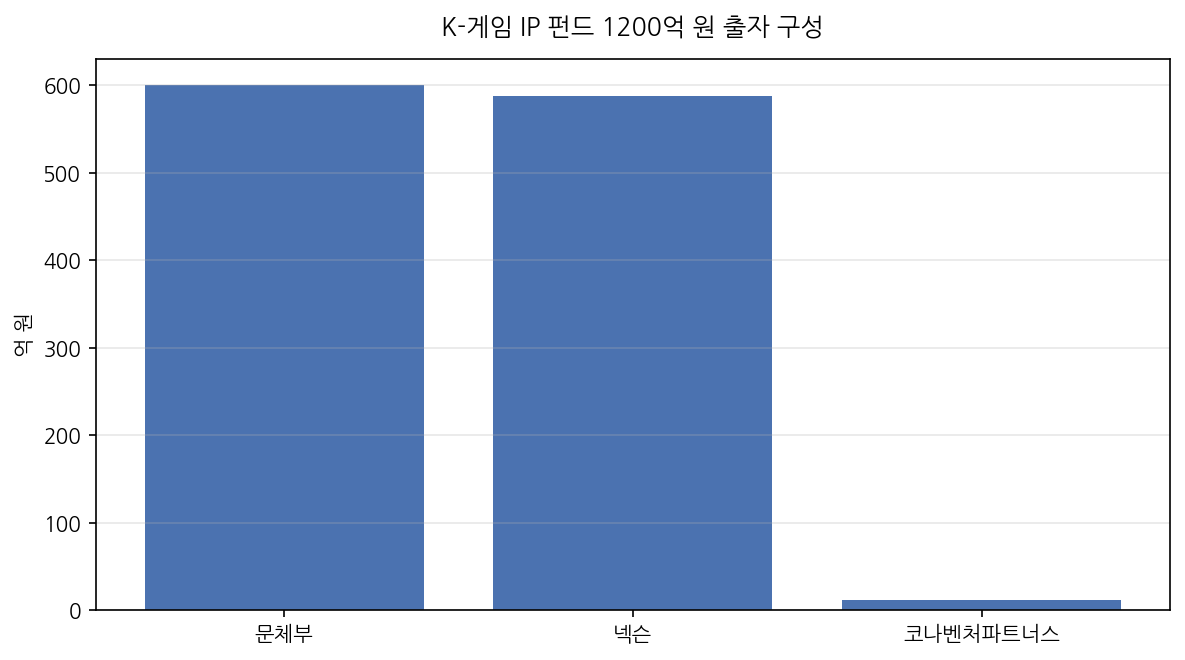
On June 23, 2026, the Ministry of Culture, Sports and Tourism (MCST) announced the formation of a ₩120 billion (~$87 million) K-Game IP Fund — the largest-ever sub-fund under the Culture Account of Korea’s Mother Fund. The fund structure:
- Government (MCST): ₩60 billion
- Nexon (Tokyo Stock Exchange-listed, ticker 3659): ₩58.8 billion
- Fund manager (Kona Venture Partners): ₩1.2 billion
The fund will invest in early-stage game developers (seed stage) and provide follow-on capital for companies demonstrating growth potential (Series A). Investment targets include game IP, narrative IP, and convergence content with global expansion potential.
Why This Policy Is Significant: Shared Risk Changes the Equation
Unlike previous government-only content funds, this marks the first time a major private gaming corporation has co-invested at near-equal scale with the Korean government. Nexon’s participation means market-based return expectations will drive investment decisions — a structural safeguard absent in Japan’s ill-fated Cool Japan Fund, which accumulated ¥35.6 billion in losses by 2023 primarily due to government-logic-driven investments in unprofitable projects. The UK’s Creative Industries Sector Plan similarly mandated private matching funds for its £30 million games development fund, validating this co-investment model internationally.
Industry and Consumer Impact
The fund addresses a structural gap: Korean early-stage game startups have faced severe capital drought. By creating a seed-to-Series A capital pathway, the fund reduces the risk of talented studios dissolving mid-development. Nexon’s pan-Asian distribution network adds strategic value beyond pure capital. For global gamers, the medium-term effect is a broader pipeline of diverse K-Game IP titles over the next 5–7 years — moving beyond large-franchise sequels to original creative IP.
References: 2025 Korea Game White Paper (KOCCA) | UK £30M Games Fund (gov.uk)
Source: https://www.korea.kr/news/policyNewsView.do?newsId=148966970&call_from=rsslink